top of page

Our Field Journal
Outdoor Design


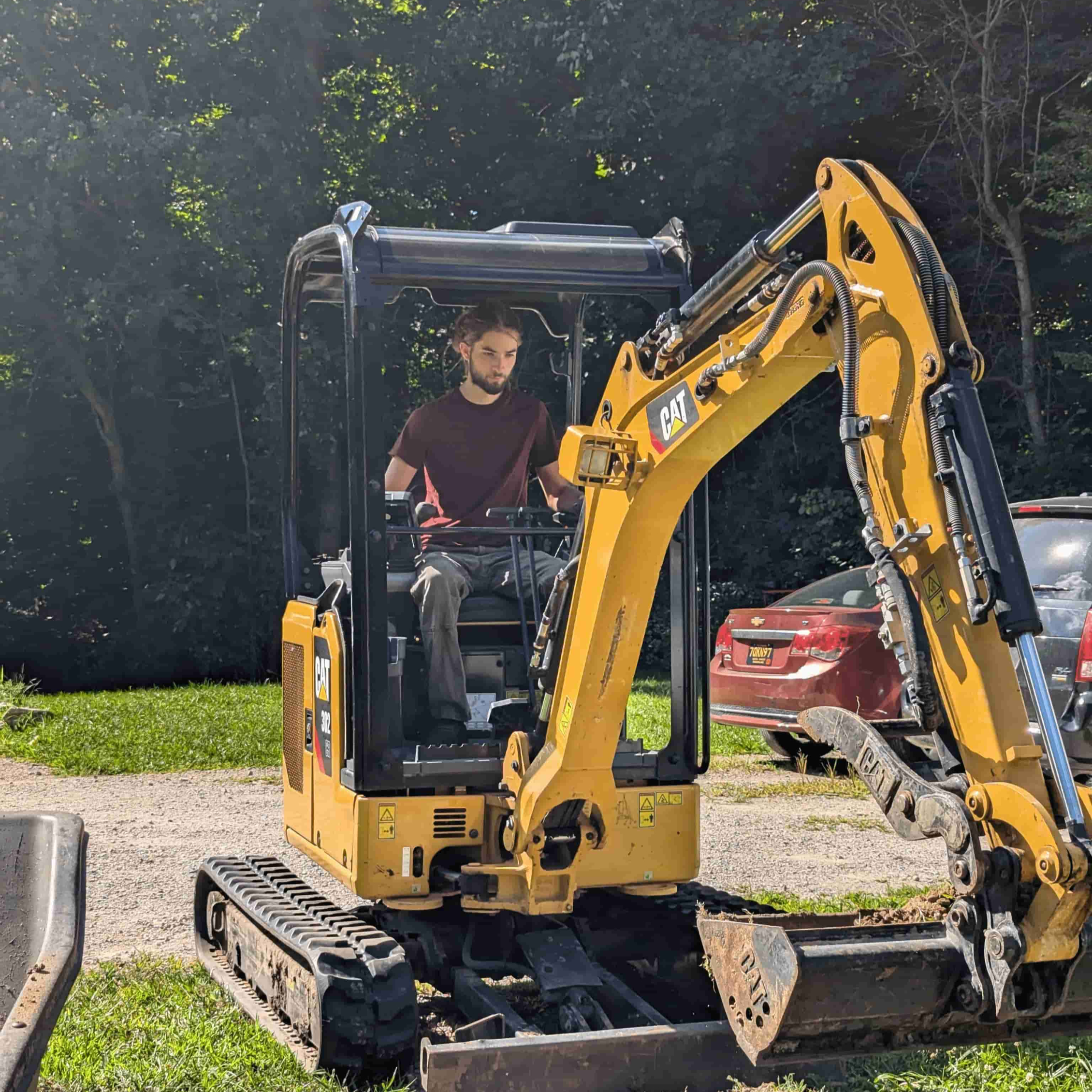
Michiana Yard Drainage: How to Fix a Muddy, Waterlogged Backyard for Good
Short answer: The right fix for a muddy Michiana yard depends entirely on where the water is coming from — and our heavy clay soil is why most backyards here stay wet long after the rain stops. Surface pooling, water rising from below, and runoff sheeting across a slope each call for a different solution, from simple downspout extensions to a properly engineered French drain. The reason so many drainage projects fail in our area isn't the idea — it's that they're built with t
Luke Salzman
Jul 1011 min read


The Grand Entrance: Why Your Front Steps Deserve More Attention
We spend a lot of time thinking about the backyard—the patio, the fire pit, the pool. But the front entry is the only part of your landscape that every single guest interacts with. Your front steps are the "first handshake" of your home. If your steps are narrow, crumbling, or steep, that handshake feels weak and unwelcoming. If they are wide, stable, and well-lit, it sets a tone of safety and hospitality before you even open the front door. Updating your front entrance isn't

Luke Salzman
May 73 min read


Hardscape Construction in Michiana: Why Your Backyard Feels Like a War Zone (And How We Manage It)
Summery Mud and disruption are guaranteed. Construction turns your yard into an active hazard zone, forcing a temporary shift in how your family and pets navigate the property. We bring materials in stages. To protect your driveway from cracking under massive point-loads, we strategically manage the delivery of heavy pavers and aggregate base. Weather dictates the schedule. In Michiana, it is not a matter of if a project gets delayed by rain, but when , because compacting
Luke Salzman
Apr 94 min read


Why Phasing Your Backyard Project Starts Underground (And In The Mud)
Summary Building a multi-stage outdoor space requires installing the structural hardscapes—retaining walls or the patio footprint—first to eliminate mud and stabilize the property. Surviving Michiana clay requires an 11-inch excavation, non-woven geotextile fabric , and 8 inches of crushed clean stone to future-proof the surface for heavier phase-two additions. Skipping the fabric or utilizing a shallow base guarantees your phase-one patio will sink and separate before you ev
Luke Salzman
Feb 265 min read


Wood vs. Gas Fire Pits: Why "Romance" Often Loses to Reality
The Summary The Verdict: If you want a hobby, buy a wood pit; if you want a lifestyle, install gas. The Reality: 80% of wood fire pits we install sit unused after the first season because the "friction" of gathering wood, lighting it, and managing smoke outweighs the benefit on a Tuesday night. The Michiana Factor: In our damp, clay-heavy region, wood pits often become sludge collectors, whereas gas pits provide instant heat without the smoke blowing into your neighbor's w
Luke Salzman
Feb 125 min read


Why Your Driveway Feels Chaotic in Winter (And How Engineered Snow Zones Fix It)
The Verdict: Surviving Snow Loads and Lateral Movement The Problem: Without designated "Snow Storage Zones," plows are forced to stack heavy, salt-laden snow on top of your delicate landscaping or across your primary walkways. The Engineering: Surviving heavy plows in Michiana requires over-engineering the subgrade with an 18 to 24-inch compacted aggregate base and non-woven geotextile fabric to prevent sinking. The Rule: Never use cheap plastic edge restraints or mulch i
Luke Salzman
Jan 15 min read


Reclaiming the Slope: Why Your "Useless" Hill is actually Your Best Future Patio
The Verdict Slopes in Southwest Michigan are liabilities; they are dangerous to mow, they channel water toward your foundation, and they represent square footage you pay taxes on but never use. A tiered hardscape system solves the drainage crisis immediately while creating flat, usable "rooms" for fire pits or seating. However, if you build this wall without accounting for the Hydrostatic Pressure of wet clay, the freeze-thaw cycle will push it over within three winters. The
Luke Salzman
Dec 19, 20255 min read


The Invisible 80%: Why "Good Enough" Foundations Fail in Michiana Clay
The Summary A patio is only as stable as the subgrade beneath it; in Southwest Michigan, a standard 4-inch base is a guaranteed recipe for frost heave and settling. We excavate 11–13 inches deep to install a hydrostatic barrier ( geotextile fabric ) and an 8-inch compacted aggregate base that bridges soft clay soils. If you cannot drive a truck across the base material before the pavers are laid, the foundation is not ready. The Anatomy of Movement (Why We Dig Deep) Homeowne
Luke Salzman
Oct 1, 20254 min read


Why Your Landscaping Feels Like a Part-Time Job (And How to Actually Fix It)
Summary Stop fighting the soil: Granger clay suffocates generic plants, and New Buffalo sand starves them; you must plant species adapted to your specific drainage reality. Anchor your beds mechanically: Lightweight wood mulch floats away during heavy Michiana rainstorms; replacing it with decorative river rock over woven geotextile fabric permanently stops the washout. Plan for the snow plow: Piling salt-heavy snow on delicate perennials guarantees winterkill, so high
Luke Salzman
Jul 10, 20254 min read
bottom of page