How Much Does a Paver Patio Cost in Michiana? (2026 Pricing Guide)

THE VERDICT
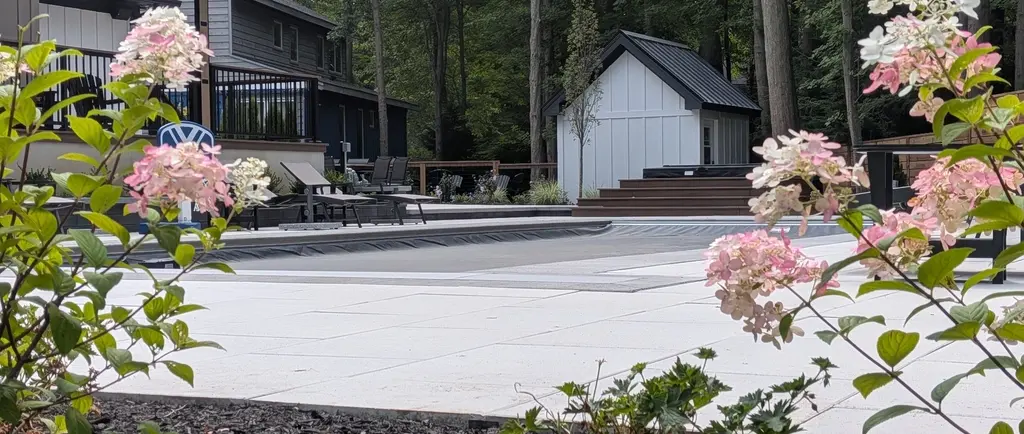
Most professionally installed paver patios in the Michiana region run $35 to $45 per square foot for projects 275 square feet and larger. That puts a typical 400-square-foot patio in the $14,000 to $18,000 range, and a 600-square-foot patio in the $21,000 to $27,000 range. Smaller patios under 275 square feet carry a higher per-square-foot rate because mobilization, equipment delivery, and base excavation cost roughly the same whether you're building 200 square feet or 500.
Those numbers come straight from our own completed jobs across South Bend, Granger, Niles, Mishawaka, and the rest of Michiana — not a national database that's never seen our clay soil or our winters. Below, we'll break down exactly what drives that price, what the common add-ons cost, and what we won't give you a number for (and why).
WHAT ACTUALLY MOVES THE NEEDLE ON PRICE
Ask five contractors "how much does a patio cost" and you'll get five different vague answers, because most of them are dodging the real drivers. Here's what actually determines where your project lands in that $35-45/sq ft range — or outside it entirely.
Size. This is the biggest lever, but not in the direction most people expect. Larger patios often cost less per square foot, not more, because fixed costs — equipment mobilization, base excavation setup, material delivery — get spread across more finished square footage. A 200-square-foot patio and a 500-square-foot patio don't take 2.5x the setup time; they take roughly the same setup time with more prep and installation after it.
Material selection. Standard Unilock product lines sit at the lower end of our range. Premium textured pavers, multi-tone blends, and natural materials like bluestone push a project toward $45/sq ft and beyond. This is usually the single biggest choice you'll make on the project, and it's worth seeing samples in person before you commit to a number in your head.

Site conditions and access. A flat, open backyard with equipment access from the driveway is a different job than a sloped lot, a fenced-in yard requiring hand-carried materials, or a patio tucked behind a house with no side-yard access. Every wheelbarrow load that has to be hand-carried instead of machine-delivered adds labor hours, and labor hours are the real cost driver behind every hardscape estimate.
Base depth and drainage. This is the part you'll never see once the job is done, and it's also the part that determines whether your patio is still flat in ten years. Michiana sits on heavy clay that holds water and heaves through freeze-thaw cycles every winter. A shallow, corner-cutting base might save a contractor money today; it's also the single most common reason patios crack, sink, and separate within a few seasons. Every patio we build starts with our engineered base system, not a stripped-down version of it, and that's already baked into the numbers above — not an upsell we add later.
Existing conditions. Tearing out an old concrete slab, removing dead landscaping, or regrading standing water before we can even start the patio base adds cost that's specific to your yard, not a national average.
MICHIANA PAVER PATIO PRICE TABLE
Project Size | Typical Price Range |
275–400 sq. ft. | $9,600 – $18,000 |
400–600 sq. ft. | $14,000 – $27,000 |
600+ sq. ft. | $21,000+ |
A 400-square-foot patio is roughly the size of a 20-by-20-foot backyard seating area — enough for a dining set and a lounge area. A 600-square-foot patio, which is what we typically build for homeowners in Granger and along the lakeshore in New Buffalo and Union Pier who want a dedicated dining zone and a separate fire pit or lounge zone, usually lands in that $21,000-27,000 band once you include a modest add-on or two.
These are real project ranges, not a rate card. The only way to get an exact number for your yard is a free on-site visit — ballpark phone estimates are almost always wrong in one direction or the other, because they can't account for your specific access, grade, or soil.
ADD-ON: DO YOU NEED A SEAT WALL?
A seat wall is a low retaining or freestanding wall, typically 18-24 inches tall, built along the edge of a patio to define the space and double as extra seating. It's one of the most requested add-ons we build, and it's priced separately from your base patio because it's its own structural element with its own footing.
Seat walls run $200 to $350 per linear foot, depending on the block or stone facing you choose and whether the wall is straight or curved. A 20-foot seat wall bordering one edge of a patio typically adds $4,000 to $7,000 to a project.
HOW MUCH DOES A FIRE PIT COST?
Fire pits are the other add-on almost every patio client asks about, and the price range is wider than most people expect because "fire pit" covers a lot of different builds.

When you're already having us build a patio, adding a custom paver fire pit to that same project starts at $2,500. That entry point assumes a straightforward wood-burning design built into the same mobilization and site work as your patio — you're not paying for a second setup trip.
If you want a freestanding or more elaborate fire feature, here's the fuller range, based on our completed installs across Michiana:
Standard wood-burning masonry fire pit: $3,000 - $5,000
Gas fire pit with a proper gas line installation: $5,500 - $9,000
Fire pit with an integrated seat wall (built as a single curved structure): $6,000 - $12,000+
Smokeless insert upgrade on a wood-burning pit: $500 - $1,500
Combining a fire pit with a new patio, rather than pricing each separately. Most homeowners building a new patio add the fire pit to the same project instead of coming back for it later, and for good reason — we're already mobilized on-site, so combining the two typically costs less than pricing them as two separate jobs. We quote this as one line item after a site visit rather than publishing a single blended number, since the final price depends on which fire pit style you choose from the range above.
ADD-ON: WALKWAYS & FRONT STEPS
If your project also includes a walkway — connecting the driveway to a new backyard patio, or replacing a cracked concrete front walk — it's priced at the same $35 to $45 per square foot as patio work, sometimes running slightly higher when the walkway includes steps, tight curves, or heavy demolition of an existing walk.
Project Type | Approximate Range |
Small front walk (4' × 20') | $3,200 – $4,800 |
Standard front walk with landing (4' × 30') | $5,000 – $7,500 |
Curved front walk with steps | $7,000 – $12,000 |
Full concrete tear-out and replacement | $8,000 – $15,000+ |
We build a lot of these as standalone projects for homeowners in Elkhart, Goshen, and Buchanan whose original concrete walk has started heaving and cracking — the same clay soil and freeze-thaw cycle that affects patios does the same thing to a thin concrete walk, just faster, because there's usually no engineered base underneath it to begin with.
ADD-ON: LANDSCAPE LIGHTING
Low-voltage landscape lighting along a new patio or walkway — path lights, step lights, or uplighting on nearby trees and architectural features — typically adds $1500 to $3,500 to a project, depending on the number of fixtures and whether we're running new wiring or tying into an existing transformer.
WHAT WE WON'T GIVE YOU A BLANKET NUMBER FOR
We've priced everything above as specifically as we can, and we'd rather tell you the one place we won't do that than pretend otherwise. Structural retaining walls — the kind that hold back a slope or grade change, not the low seat walls described above — vary more than any other hardscape service we offer. Height, soil type, drainage requirements, engineering, and whether the wall needs to support a driveway all change the math enough that a per-foot number would be misleading rather than helpful. Nationally, small decorative walls can start under $6,000, while large engineered structural walls with drainage systems and premium finishes can reach $60,000 or more. If a retaining wall is part of your project, the most useful next step is a free site visit — not a number we'd have to walk back later.
WHY MICHIANA PRICING RUNS HIGHER THAN NATIONAL AVERAGES
If you've seen national "patio cost" articles quoting $15-25 per square foot, here's why our numbers run higher — and why that gap matters more than it looks.
Michiana sits on heavy clay soil that holds water and moves through repeated freeze-thaw cycles every winter. A patio built to a generic national spec — a thin gravel base with no geotextile fabric underneath — might hold up fine in a warmer, sandier climate. In our soil, it heaves, settles unevenly, and cracks within a few seasons. Every patio we build starts with a full engineered base system rather than a stripped-down version of it, which is part of why our per-square-foot number runs higher than a national blog post that isn't accounting for what's actually under your yard. You're not paying more for the same patio — you're paying for a patio built to survive here.
FREQUENTLY ASKED QUESTIONS
Is the price I'm quoted the price I pay, or are there hidden fees added later?
Your written estimate reflects the full project cost based on your specific site, including base preparation, materials, and installation. We don't add surprise line items after the fact — if something changes the scope once we're on-site (like discovering poor soil or a buried utility line), we'll walk you through it and get your approval before any cost changes.
Does my quote include add-ons like a fire pit or seat wall, or are those priced separately?
Add-ons are priced separately from the base patio, since they're separate structural elements with their own material and labor costs. When you request a quote, tell us which add-ons you're considering (fire pit, seat wall, lighting, a connecting walkway) and we'll include line-item pricing for each in the same estimate, so you can see the full picture before deciding what to include.
What's the best time of year to book a patio project in Michiana?
Late fall and winter are our slowest booking months, which means earlier availability and more schedule flexibility for spring installation. If you're planning a patio for next summer, getting on the schedule in the off-season is the single easiest way to avoid the spring rush.
Do I need a permit for a paver patio in Michiana?
It depends on your township and the size and height of the project — some municipalities require a permit for patios above a certain square footage or for any structure involving retaining walls or electrical work like landscape lighting. We handle permitting as part of the project in the areas where it's required, so this isn't something you need to research on your own.
How long does a typical patio project take, start to finish?
Most patio projects, including base excavation and paver installation, take one to two weeks depending on size and whether the project includes add-ons like a seat wall or fire pit. Weather and site conditions can extend that timeline, which we'll walk you through during your estimate.
Will pavers actually last longer than a poured concrete patio in Michiana?
Yes, and it comes down to how each material handles our freeze-thaw cycles. Poured concrete is a single rigid slab that cracks when the clay underneath shifts. Pavers are individual units set in a flexible base, so they move with the ground instead of fighting it, and individual pavers can be lifted and reset if something below ever needs attention — you can't do that with a cracked concrete slab.
GET YOUR EXACT NUMBER
Every range on this page comes from real Michiana projects, but your yard isn't a national average or a table on a website — it's your soil, your access, your slope, and your vision for how you'll actually use the space. The only way to turn these ranges into an exact number is a free, no-obligation site visit.
Serving Niles, South Bend, Granger, Mishawaka, Elkhart, Goshen, Buchanan, Edwardsburg, New Buffalo, Union Pier, Three Oaks, Bridgman, Sawyer, and Benton Harbor.


Comments